V02C, Yūka Sooda ‘21, Teruo Sooda, Grandfather, 1942, Kagawa, Yokohama: Isogo-ku, Grandmother, Brazil
My paternal grandfather was born in 1942, during World War II. In November 2019, I asked him about his memories of childhood.
Q: Do you remember what it was like when you were born, right after the war began?
A: Well, I only really remember clearly from about three years after the war began. But I do remember when my older sisters went to Shikoku. It was called sokai (evacuation), when parents sent their kids to more rural areas, away from the heart of the bombings in the Tōkyō-Yokohama area. I stayed with my older brother (onii-san), with the rest of the family, because we were too young. We lived in the Isogo area, so we weren’t bombed. But I do remember seeing the bombs explode in the main city area, during the Kūshū (air raids). It was terrible. We saw bright flashes, and I didn’t realize what was really happening back then, but looking back now it really was horrible. When we went to the city, we saw that whole areas were almost burned to the ground. The bodies had been cleaned up by then, but there wasn’t any tall building left standing.
Q: What was it like after the war?
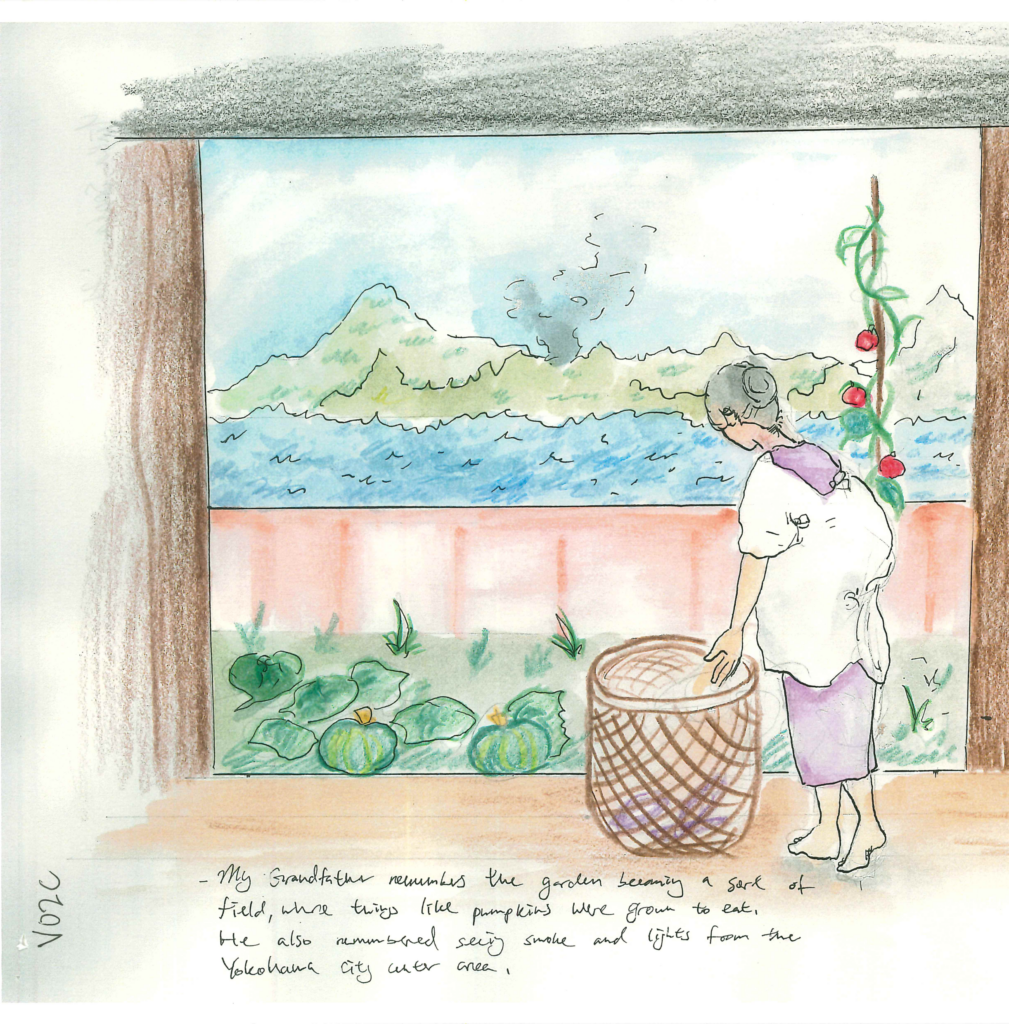
A: I remember there were metal shortages, especially during the war, so I was told that, when the Army was building the planes before we surrendered, we had to give up our pots and pans, anything made of metal, to the Army. We also changed our big garden into a sort of field, so we could grow vegetables to eat. The government rations weren’t really enough. We grew things like sweet potatoes, pumpkins, and other crops.
I know I keep going back to the food, but I think that was the hardest part for me. We really didn’t have much to eat. Everything was rationed, and we almost never had treats. Our food came in rations called haikyū, and those were almost never enough. We were lucky though. Since we lived by the ocean, we were able to fish, and get food to eat from the sea.
After we surrendered, there was a march of rows and rows of American soldiers marching towards Yokohama. They didn’t really do much; they just walked by.
Q: What was it like growing up after the war?
A: There weren’t many changes in the way I grew up. I do remember a lot of American troops marching around, and sometimes the small children would ask them for sweets. I don’t feel very much that the troops were a bad influence. But, I do remember sometimes that some women were flirting and walking hand in hand with the troops, and people would talk about how she was “servicing” them. But, I personally never thought much about it. We all knew she was with him to make money.
A lot of us thought that we were lucky to have the US troops around us. They gave us food and helped us when we needed it. We knew they weren’t there to hurt us, but to help us get back on our feet.When we were in school, we didn’t learn anything about the war. It just wasn’t touched on.
Q: What effects of the war did you feel in your personal life?
A: We were in the warehouse business even back then, and the family warehouses were all taken over and occupied by supplies for soldiers. They were seized, and became government warehouses. It was very bad for the family business. We got them back eventually, but it was hard before that. But, like I said, since we lived further from the city center, conditions weren’t all that bad.
Personally, the Japanese economy really started improving in the 1960s, after I left for Brazil. Before that there wasn’t much change or effect that I saw. The war didn’t affect me as much as some of my other friends, who lost their houses amongst other things. I could say I was really lucky.
From Grandmother: My Grandmother is a third-generation Japanese who grew up in Brazil. She feels comfortable speaking in Portuguese. She grew up in the rural area closest to São Paulo, on a coffee farm, then attended São Paulo University, living there until the 1990s. My father went to high school and college in the U.S, whereas my grandparents were educated in Japan.
Q: What was your experience in Brazil about the war?
A: It wasn’t pleasant. My experience is a lot more violent than your grandfather’s. The Japanese population in Brazil were split into two, where one group accepted the defeat of Japan (even though most Japanese immigrants in Brazil were still rooting for Japan), and they thought people should focus on bettering themselves after the war against the racial discrimination they were facing. The other group insisted that Japan would never surrender, and refused to believe that they had lost the war. This started turning violent, and there were often fights between the Kachi-gumi (the winner’s team, who did not believe Japan lost) and the Make-gumi (the loser’s team, which accepted Japan’s defeat.) Brawls would often break out in the streets. Also, during the war, if you were Japanese, you had to be really careful. If you talked too much or acted “too Japanese,” the police would drag you off to prison. It happened to one of my relatives; he was running his mouth off to some people in Japanese, and they took him and threw him in prison. The first and second generation of Japanese in Brazil) suffered heavy discrimination.