U04, Miyu Nagashima ‘20, Grandmother, 1929, Kanagawa: Kamakura-shi, Yokohama: Kanazawa-ku
I interviewed my grandmother at home on October 15, 2018. She was born in 1929 and is 89 years old. This is her story during World War II.
My family had a sushi restaurant in Kamakura, near our house. Although not as successful as my mother hoped it would be, many famous people frequently visited, such as kabuki actors and the former Foreign Minister. Amongst our customers, restaurant critics from the Asahi Shimbun newspaper favored our shop the most. They often came and discussed current affairs and politics over sushi. I liked to eavesdrop. I could hear them talking about some war going on, but I didn’t fully understand.
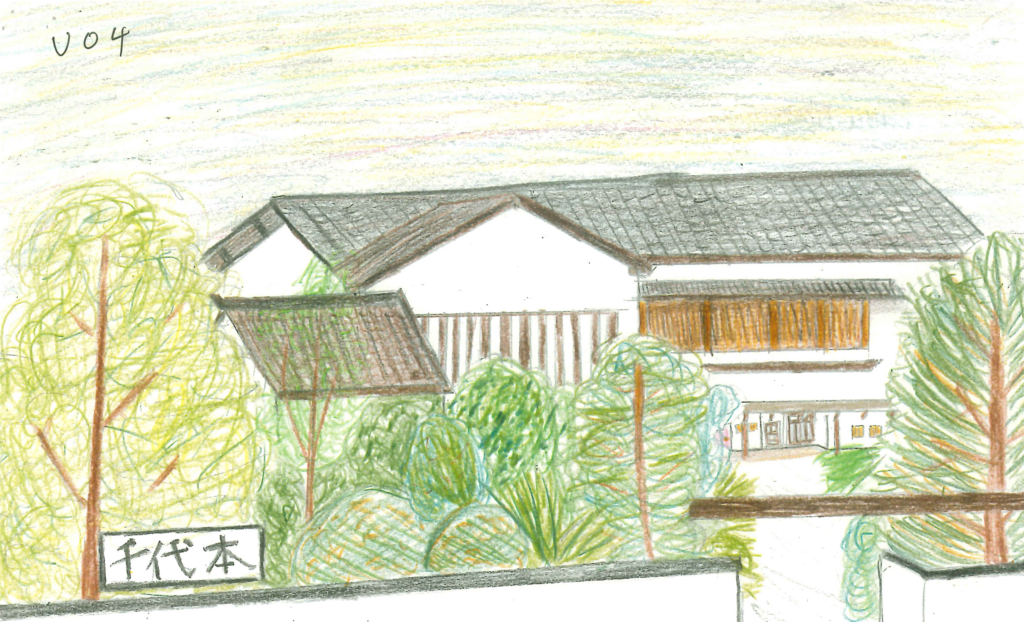
When I was 12 or 13, my classmates and I were sent to Kanazawa-Hakkei, where we stayed at a hotel called Chiyomoto, all 60 of us girls. For most of the day, we worked in a factory called Kōbe Seikō.There were middle school boys from Zushi Kaisei Middle School as well. Together, we built weapons, mostly machine guns. For three or four years, the schools in my area were closed, girls were sent to factories, and boys who were old enough were conscripted into the army. Later, after the war, my eldest brother came back from military service with pneumonia, and was immediately hospitalized. I didn’t know whether or not to be excited he was back.
Often at the factory, we would hear deafening sirens, loud explosions and jets flying above our heads. The noises haunted me. I couldn’t escape them. We were told by our teachers that the United States or some other country was aiming at the Tōkyō-Yokohama area and around Mount Fuji, because this was where most of the weapons factories were. Every time the sirens rang, we hid in shelters, which were mere holes underground or caves, or we ran towards wherever everyone else was running. I remember running once, past an elderly woman sitting by her doorstep. She was looking up at the jets flying above, in a weirdly fascinated manner. I wanted to tell her to run or even to drag her along, but the other girls were pushing me. Later, I heard a raucous explosion nearby. The sound rang in my ears for a few seconds. I kept running. Later that day, I heard a rumor that the elderly woman was blown to pieces.
Once a week, on Saturday, Sunday, or Monday, we were allowed to go home. My youngest brother and sister were usually there. They were still elementary kids. My older sisters must have stayed at home too, or perhaps they worked as rice cookers for the government. Either way, I couldn’t know for sure. I didn’t get to see any of them much. I brought home beans as gifts when I could. They weren’t coated in sugar or anything; in fact, there was no sugar. They were just plain beans. Food was scarce. We were separated into organized tonari-gumi (neighborhood organizations). We would buy and share food within groups of families. Collectivity was important. It would’ve been impossible to survive without collaborating with our neighbors. Sometimes, we made grain to trade in the black market. However, whenever we left it in the carriage, the next day, the grain would all be gone. My mother told me that war makes people do bad things and that it’s not their fault.
My parents were very social and popular amongst our neighbors. My mother took care of kids whose parents were killed in the Tōkyō bombings. My father was always asked to buy goods for families, schools, markets, and hospitals in Kamakura. Right before the end of the war though, my father became sick. His dentist didn’t properly sanitize his tools when he pulled out his cavity. The infection was so bad that my father was hospitalized. I always thought he cared more about Kamakura as a whole rather than our family. However my mother told me that everyday, he tried jumping from the balcony of his hospital room in hopes of seeing us one last time. After he passed away, my mother subsequently became ill as well. After the war, although I was accepted to the university I wanted to go to, I left after two months to take care of her.
In August of 1945, or so I think, the teachers gathered us around a small radio. The Emperor was speaking, and people were celebrating. I didn’t understand anything. We were told that we could return home permanently, but confusion clouded my joy. Perhaps the microphone the Emperor was using was old or disconnected, since I couldn’t understand what he was saying.
Now I see contemporary news on ongoing wars and use of weapons. No matter how many people are hurt, war is devastating. I wonder when the world will come to understand that war brings about nothing but bloodshed and destruction. I wonder when the world will realize that death is irrevocable. I wonder when the world will come to peace.