N01, Reira (Layla) Ichima ‘07, Mineko Shiina, Grandmother, 1936, Yasuo Shiina, Grandfather, 1934, Chiba, Gunma, Ibaraki
My maternal grandmother, Mineko Shiina, is 69 years old. She was born on January 23, 1936. On October 25, 2005, I interviewed her at her house in Yōkōdai, Isogo-ku, Yokohama.
Layla (L): How old were you when World War Il began? Where were you living at that time?
Grandma (G): I do not remember anything about the Pearl Harbor attack, but I do remember that when I was in first grade, the war was very intense. I was in Tōkyō, but because the war was becoming violent, people who had a house in the countryside needed to move there.
L: Did you have a house in the countryside?
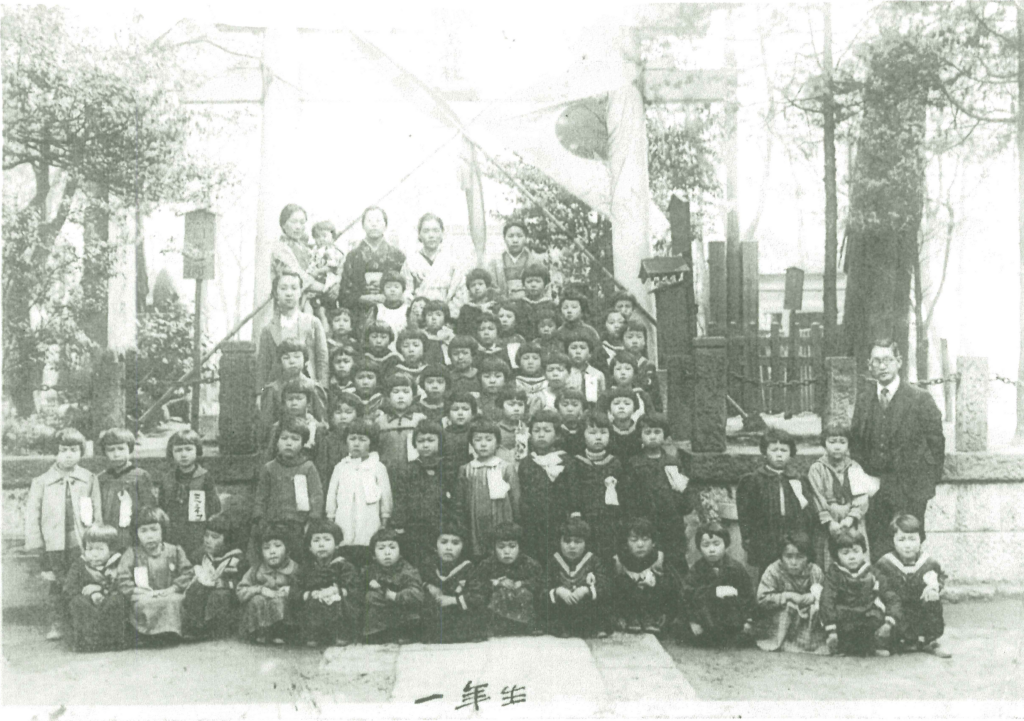
G: My father’s house was in Chōshi on the Pacific coast of Chiba prefecture. But actually, my father did not want to go back to Chōshi for some reason, so our family was considered as a “family with no house in the countryside.” So my parents and my sisters stayed in Tōkyō, but I went to rural Gunma prefecture with my classmates. We stayed at a temple in Gunma. By that time, I was in third grade. I missed my family very much. Plus, I was starving due to the scarcity of food.
L: What kind of food did you eat?
G: Mostly potatoes, eggplants, and cucumbers. Sometimes we got apples, but we were told to eat the core of the apple as well, so we would not be as hungry. I was feeling very lonely, but then one day, my mother visited me, because she had won a chance to travel. I was so surprised when I saw her. I remember how I hugged her tightly and didn’t let her go. I cannot forget that my mother brought a canteen for me. She told me that it was water from God, but when I opened it, I instantly knew that it wasn’t water. It was milk. Milk at that time was very rare and expensive to buy. I felt guilty for having milk for myself, when all my classmates were starving to death.
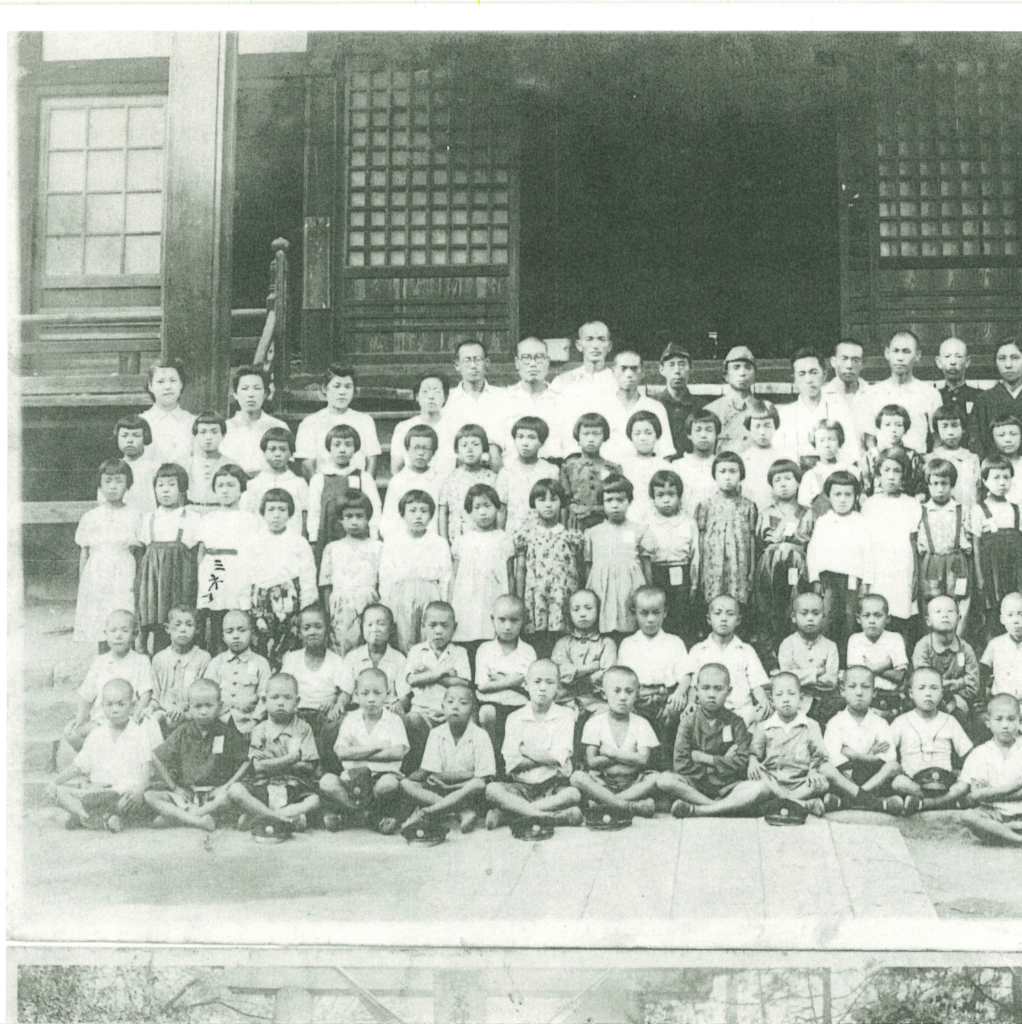
Two weeks later, my father came to Gunma. He was surprised to see me all dirty and skinny, so he took my hand and told me that we were going to Chōshi. We packed our things, but half of our luggage was burnt at Tōkyō Station. Luckily, the other half arrived in Chōshi safely, so we were all happy. However, we had no time to be relieved and happy. My father needed to go and fight in the war. I prayed everyday for my father to return to my family safely.
Almost everyday the siren was ringing noisily, telling us that the planes were right above, ready to attack us. I held hands with my sisters, while my mother carried my little brother on her back, and she pushed a cart every time we ran for our lives. When it was safe to return, another kind of siren rang. That siren had a softer sound. I always wished for that type of siren to ring quickly, while we were running for our lives. We all had hoods on our heads, and we escaped into the mountains, since my father told us never to go near the sea.
L: Why?
G: Since there was no place to hide near the sea. But one time we did. A person shouted to us to escape towards the sea, so despite the fact that my father told us not to go near the sea, we went there, but that was a big mistake. Many people were shot, and one by one the people collapsed on the ground, right next to me. I cannot express how scared I was. I did not even have time to look at the people who were killed right in front of me. All I had in my mind was the spirit to live. Every time someone shouted, “DUCK!,” automatically, my body went flat on the floor, with my eyes and ears covered tightly.
L: Why did you cover your eyes and ears?
G: Because your ears would be damaged due to the loud noise of explosions. Your eyes might pop out, too. The happiest moment was when my father came back to our house. We were all surprised when he came back, because it was so sudden. I was glad that he looked healthy.
L: Does that mean that he had plenty to eat?
G: Yes. He had enough to eat, because he was a soldier. Soldiers needed strength in order to fight the battle, right?
L: What was it like when the war ended? Were you shocked that Japan lost
G: No. It’s funny, instead of being shocked, I was relieved when the war ended. I was relieved, because I knew that I wouldn’t need to be scared anymore, and most of all, I could sleep from now on! During the war, I hardly slept, because every night sirens were ringing everywhere, ringing in my eardrums. Also, I was fed up with needing to escape and running for our lives, so I was relieved after the war.
Although it took time to repair everything, because the Americans brought us food and supplies, things weren’t as bad as I thought they would be. However, tears filled my eyes when I saw the countless number of boxes stacked near the sea. Every day, the boxes were increasing.
L: What was inside the boxes?
G: Corpses, Layla. The war killed many innocent people, but I’m happy that I am alive right now. I should be very thankful.
I also interviewed my maternal grandfather, Yasuo Shiina, who is 71 years old.
Leila (L): How old were you when World War II began?
Grandpa (G): When I was in first grade, Japan attacked Pearl Harbor. Because we won, I remember how I walked in a line with my friends, waving a little Japanese flag. We were all yelling, “We won, we won!”
L: So at that time, there was sufficient food, right? What kind of food did you eat?
G: Since I was living in the countryside outside of Mito, I mostly ate rice and vegetables from the field. When Japan ruled over other countries, such as Singapore and Indonesia, all the students in my school waved our Japanese flags again. Those were the good times. However, our happiness did not last long, because America took over the countries that Japan was ruling. To tell you the truth, I did not know that Japan was in a dangerous situation, because the radio told us untrue news. The news told us that Japan was winning against America, and we had nothing to fear. Everybody believed the news.
When I was in second grade, my family and I went to a place called Hitachi, since my father was working at the factory there, making airplane components. We stayed there for two years. However, we were told that we should move back to our home near Mito, because the American planes might attack the factory. Therefore, we moved back. One week after we came back to our house, I heard that the factory in Hitachi was burned down because of the bombing. I consider myself lucky. If my family did not move back, I could have died.
L: Did the American planes attack the place where you were living?
G: Not really. There is nothing in the countryside, so I guess the U.S. thought that there was no point bombing there. On the contrary, since Hitachi had factories, America bombed there so that all the airplane components would be destroyed.
L: Did you have enough food to eat?
G: No. Our relatives shared their food with us, since my family did not own fields, but we could not just get food from them for free. My mother sewed many clothes and exchanged them for rice, so we were able to survive and avoid starvation. I wasn’t really scared. I knew that I was safe in the countryside.
I also remember how I tried to gather the liquid from the pine trees. The planes were out of gasoline, so my friends and I gathered the pine sap in a bamboo cylinder, and we brought it to our school. We kept on collecting the sap until my father told us to stop. He said that it was meaningless to gather the sap to replace gasoline, because Japan lost the war against America.
The next day, our school principal was crying. He told us that we lost. Frankly, I was relieved that we lost. Somehow I was not sad. I think that I was not upset, because I did not lose my family or my friends. I was relieved that the war was over, since I would not need to feel insecure anymore.
L: But didn’t you think that the Americans might treat you all unfairly?
G: At first I did. Huge jeeps came to our place, and we were all scared. We thought that the Americans would bully us. However, the Americans did no harm to us. Instead they even gave chewing gum to the children, including me as well. I was surprised.
L: Wow, I thought that Americans treated Japanese people badly after the war.
G: Yes, many people misunderstand and think that Americans were the bad guys from the beginning to the end. Many innocent people died, and I do feel sorry for the families who lost their precious relatives, but I cannot do anything for these poor people except to be grateful for being alive right now.