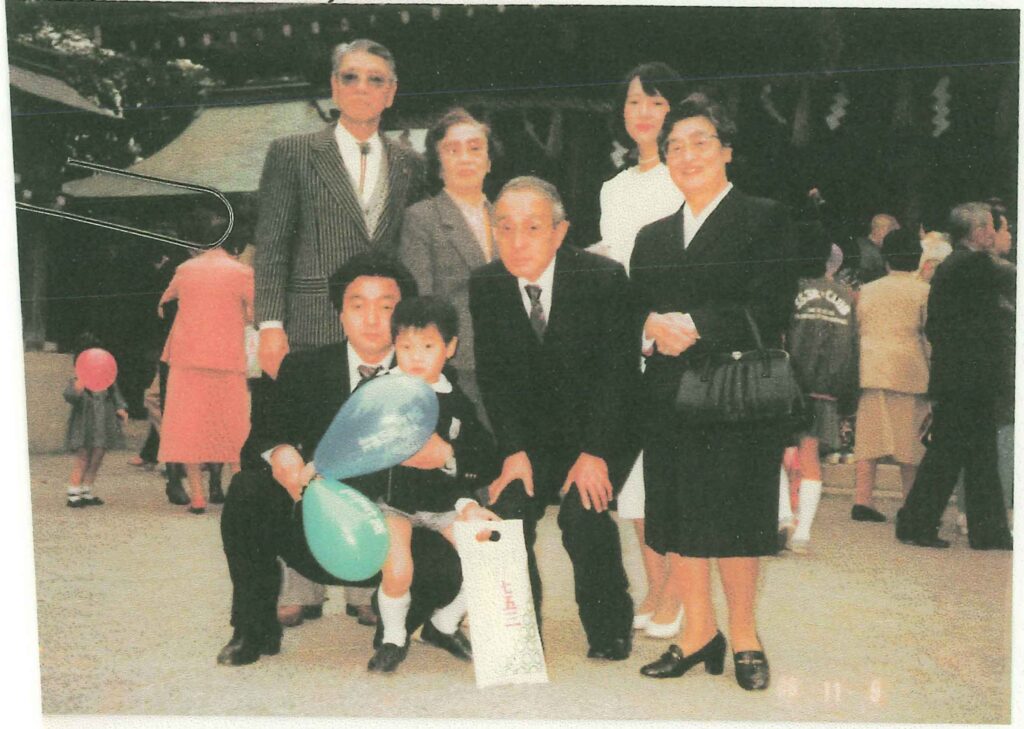
H19, Yūta Yoshii ‘00, Sumio Tada, Grandfather, 1915, Gunma, Philippines
On Sunday, November 15, 1998, I visited Sumio Tada, who is my grandfather. He is my mother’s father, so she used the surname Tada until she married and became Yoshii.
My grandfather was born in Gunma prefecture on May 10, 1915, and he is now 83 years old. He lives with his wife, my grandmother, in Yamato-shi, and the closest station is Minami-Rinkan on the Odakyū Line.
He grew up in Gunma but moved to Tsurumi in Yokohama when he was in high school. He graduated from Hōsei University. He was very interested in electricity, so he went to work for Tōshiba, which was one of the largest electrical appliance companies in Japan. However, World War II affected his life in many ways. It started in 1941, when he was 26. He was forced to join the Army for training. These sessions involved all of the eligible young men from different parts of Japan. He learned how to use weapons and military strategies. He said that the training sessions were very hard, because they started early in the morning until late at night. I can imagine how hard this must have been.
However, I asked a question which gave me a great shock. I asked him “Did you ever feel like quitting the Army?” I was expecting an obvious answer, like “Without a doubt, yes.” But his answer was totally the opposite of what I was expecting. Instead of wanting to quit, he said that he was proud of being in the Army, because he was fighting for the country, the flag, and the Emperor. He didn’t feel scared at all, because he had no fear of dying for his own country. In fact, he said that he would be proud to die for his country. His answer told me how patriotic he was. If I had been in that situation, I would probably be thinking of some way to escape from the Army. When I told him this, he laughed a little bit and continued with his talk.
When war broke out, soldiers were sent to different places to fight. My grandfather was sent to the Philippines with many other soldiers. He said they traveled by ship, but he didn’t remember exactly how long the journey was. But he did remember that life aboard the ship was very hard, because the ship was full of soldiers, and they were all jammed in together. Many of them were sick, including my grandfather. There was no good medicine on the ship, so many soldiers lost their lives. There was also not enough food, causing many of them to starve. All they had was one or two sweet potatoes a day.
However, more serious trouble continued when he actually reached the Philippines. They were caught by the Americans as soon as they got off the ship. He thought that they were all going to be killed. However, the American soldiers didn’t attack them at all. Instead, they confiscated all of their weapons, and they were all sent to the small factories that were run by the U.S. Army. My grandfather said that he had two different emotions. He was relieved that he was not going to be killed. Another feeling was shock, that he hadn’t been able to fight in the war. He didn’t want all of his training to go for nothing, and he wanted to fight for Japan. But he was captured, so he had no choice but to work in the factory.
Life in the factory was very difficult, because they were forced to work from sunrise to sunset. They were only fed once a day with a small meal. He couldn’t remember what the food was; he just remembered that he didn’t like it. During this time, my grandfather had one pleasure. He and the other soldiers played a game called Mahjong every night, using pieces that they made themselves out of wood.
Life in the Philippines continued until the announcement that Japan had lost the war. This was the end of World War II, and my grandfather and all of the other soldiers were sent back to Japan by ship. He still remembers stepping on Japanese soil again for the first time in four years. He said that his tears would not stop. The new life for my grandfather was about to start.
After finishing this interview, I was able to understand the hard life that my grandfather endured during the war. I could tell that his life in the Philippines was very hard. However, it was fortunate that he was able to come back to Japan safely, since there were many people killed in the war. He had lost many of his friends, so he said that war should never occur again.