J04, Nanae Nakagawa ‘01, Kyōichi Nakagawa, Grandfather, 1918, Manchuria, Philippines, Taiwan
I decided to interview my grandfather, because I know him very well. I talk with him nearly everyday, but this was our first time to talk about war. He was born in 1918 and is now 81 years old.
My grandfather, Kyōichi Nakagawa, graduated from Tōkyō University in September 1942. He was supposed to graduate in March 1943, but since the Japanese Army wanted more soldiers for the Second World War, he was forced to join the Army six months before his graduation. He was sent to Harbin, Manchuria, now located in northeastern China in October 1942, where he was educated in an Army hospital. He wasn’t one of the soldiers who fought, but his goal was to build the water supply and to prevent the soldiers from contracting diseases. After two months, he was promoted to a middle rank (chūi, or first lieutenant) and moved to a town on the border of Manchuria and the Soviet Union, where he joined the Eighth Division.
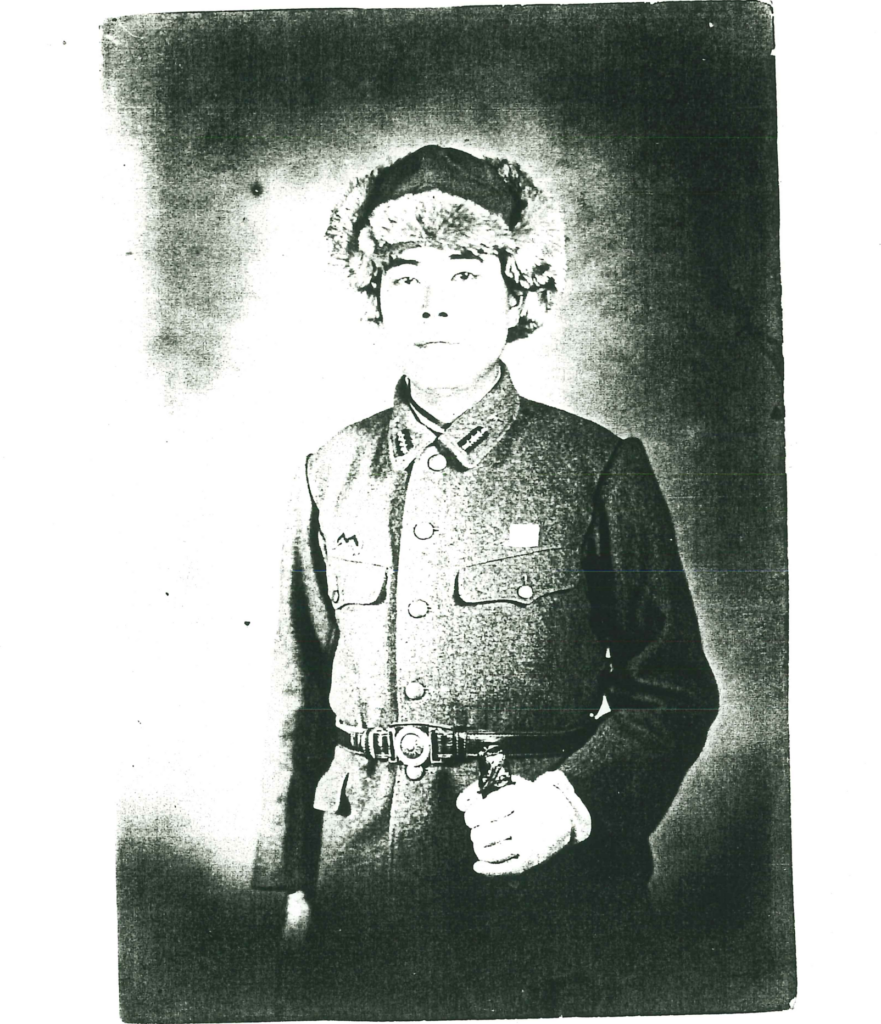
My grandfather became the chief of the water supply system. The Japanese Army needed a supply of drinking water, but in this climate, when the temperature fell to minus 30 degrees Celsius every day in winter, all liquids froze. He was experimenting on how to get water from frozen rivers and lakes. In May or June 1944, General Yamashita Tomoyuki, arrived and ordered the Eighth Division and the other regiments in Manchuria to move south, to the Philippines. So my grandfather left Manchuria on the first day of August 1944.
It was about two and a half months later, on September 23, 1944, when my grandfather finally reached the Philippines. He was ordered to go to a town called Los Baños to take charge of water supplies there. But in the Philippines, the water did not freeze, and there were a lot of rivers and a big lake called Laguna de Bay. So my grandfather worked on preventing malaria. To prevent the Japanese soldiers from contracting malaria, he first decided to cure the Filipino population. Since he had medicine, he cured a lot of local people and was respected because he was curing them for free.
In December 1944, when my grandfather’s group was travelling on five trucks from Laguna de Bay to Los Baños, which were only a few kilometers away from each other, his group was attacked by the American Army. Usually they were only allowed to travel during the night, but since the distance was short, they decided to move. My grandfather’s group was shot by machine guns from American airplanes. My grandfather was on the first truck, but the truck fell over, and the windshield and the wooden rod between two pieces of glass collapsed. He cut a nerve on his wrist and broke two teeth. (Because his nerve was cut, he still cannot move his pinky finger.) He also said that he felt the wind of the bullets beside him.
On January 9, 1945, General Douglas MacArthur arrived in the Philippines, and by March, my grandfather had to move into the mountains to hide with his patients. They had to run away because they didn’t have any weapons to fight against the Americans. My grandfather ordered his soldiers to take only rice, wheat, and salt to the mountains. They had ten trucks, so they broke eight of them into pieces and buried the other two underground on their way to the mountains.
On August 15, 1945, the war was over, and Japan had lost. But it was not until one month later, on September 1, that my grandfather was informed that the war was over, because they lived in the mountains. They were told to give their weapons to the American soldiers. Scared and worried, they went to the place where the Americans were waiting. My grandfather thought that the Americans might start killing them, but they didn’t. Instead of shooting them, the Americans greeted them in a friendly way. They shook hands and the American soldiers gave the starving Japanese soldiers food rations.
Most of the Japanese were sick, so the Americans built a hospital in the garden of Bilibid Prison in Manila, with tents for them to stay in. My grandfather worked there as a doctor for about three months until one day in December when his name was called. He was told to leave his patients to the other doctors, pack up all his belongings, and go to the gate. A bus was waiting for him and brought him to Manila Harbor. There was a destroyer with about two hundred Taiwanese on it. The destroyer headed to Kaohsiung [Gaoxiang] in the south of Taiwan. The two hundred Taiwanese got off, leaving the destroyer with only two passengers, my grandfather and another Japanese man named Sawada. They spent one week in Kaohsiung. At night, when the Americans did not give orders, the general gave them permission to get off and have a little bit of fun in Kaohsiung. So my grandfather and Sawada went to a hot springs resort and drank beer. He told me that this was his first time to drink beer since the war started.
On January 2, 1946, the destroyer arrived in Ōtake, near Hiroshima. He finally came back to his home land. Two years ago, my grandfather went back to the Philippines because he was asked to give a speech there. (He is now 81 years old, but he still works.) He visited Los Baños, Laguna de Bay, Bilibid Prison, and the place where he got injured. He told me that many things have changed, and he could hardly recognise them, but the towns still remained.
This interview turned out to take one and a half hours. I actually didn’t ask any questions, because he never stopped once he started to talk. I think this was better, because his stories were much more interesting than the answers of my questions would have been. I was amazed at how much my grandfather remembered, all still fresh and clear in his mind.