L15, Akiko Shimizu ‘04, Shōzō Katsuta, Uncle, 1935, Nagano
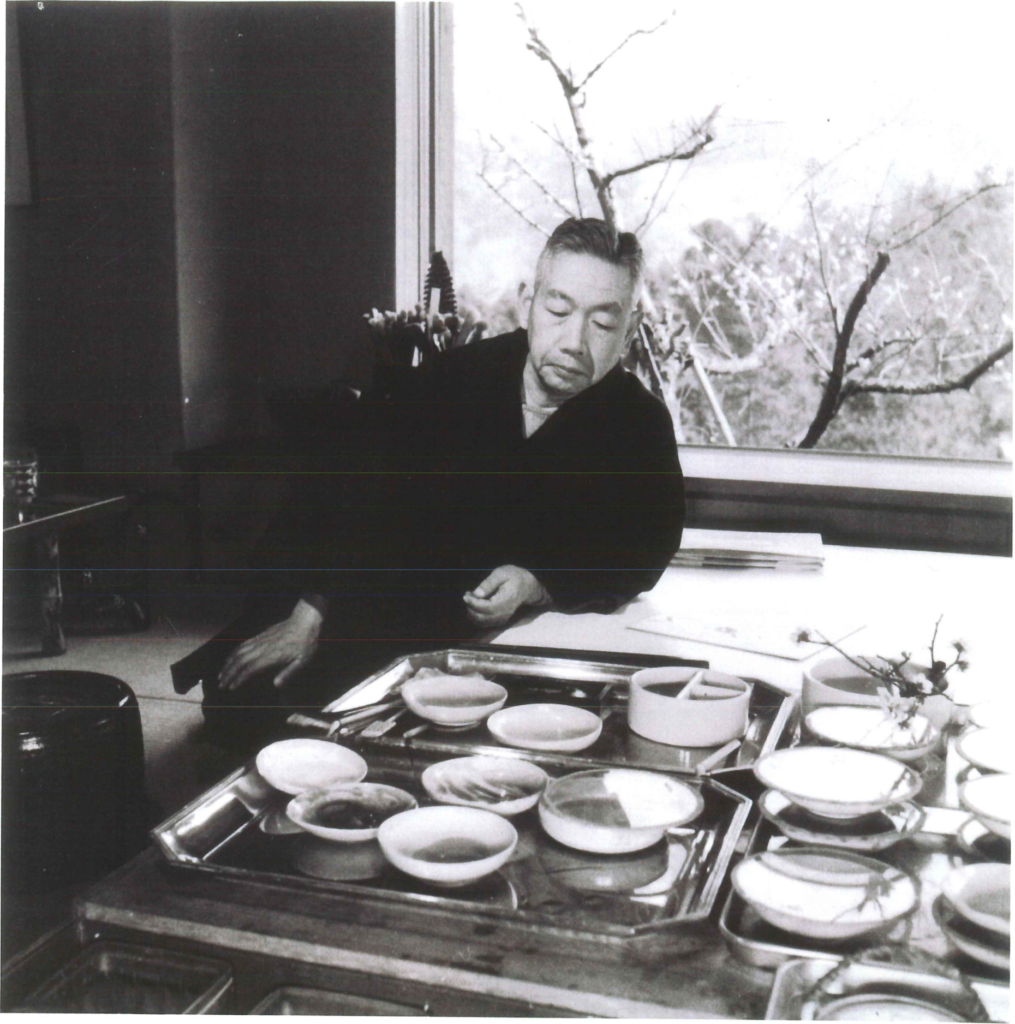
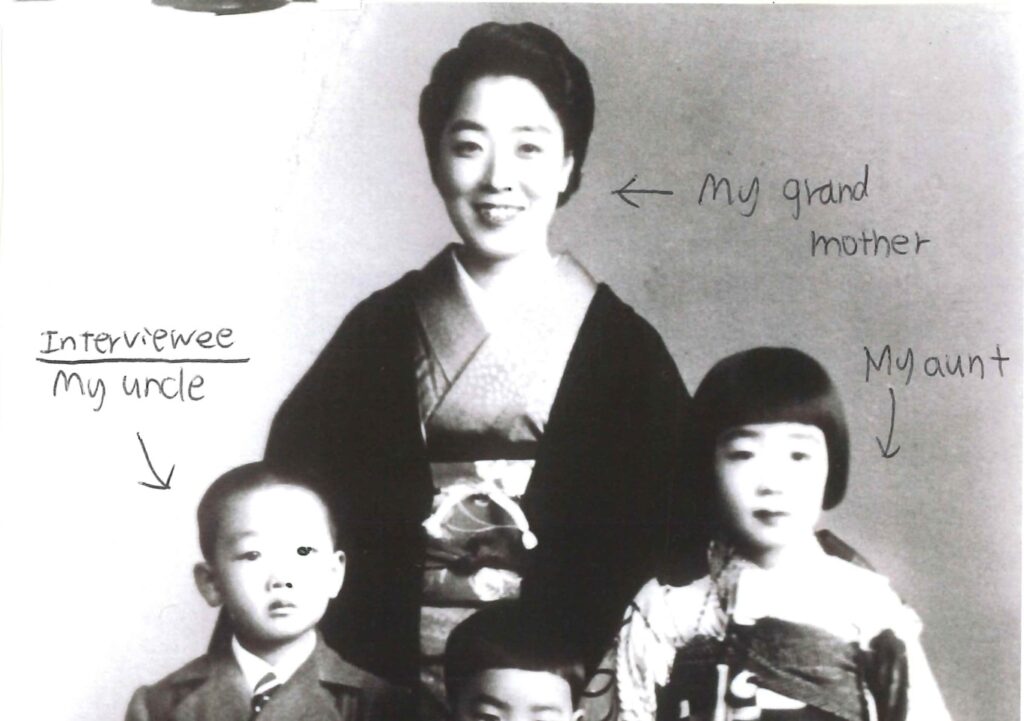
On October 27, 2002, I interviewed my uncle at his house. His name is Shōzō Katsuta, and he is 67 years old. [His father, and Akiko’s grandfather, was Shinsui Itō (1898-1972), a well-known artist of Japanese paintings, called Nihonga.]
Question: What did you think about “war” in general?
Answer: Honestly, I didn’t understand exactly what war is, but by hearing stories from my parents and teachers, I saw war as when someone evil came to invade Japan and kill Japanese.
Question: How was your life changed by World War II?
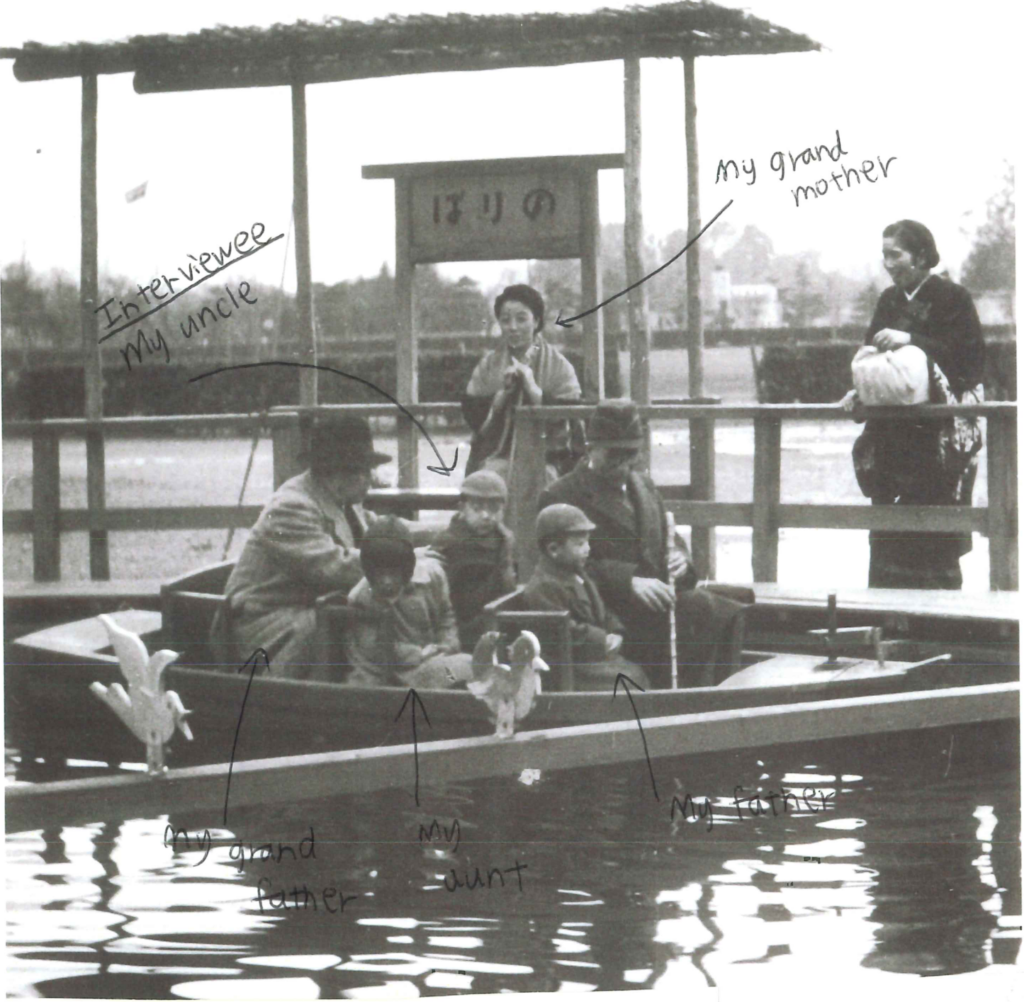
Answer: My father, who is your grandfather, was a painter, so he didn’t go to the war. Our family moved to Nagano to escape from the threat of war. My father painted some pictures of war there for the government. Therefore, the place where we lived had changed, but our life itself was quite stable and safe.
Question: What did you eat during that time?
Answer: There was never enough food at that time. I think you can’t imagine it. Nowadays, you can eat anything whenever you want, but of course I couldn’t. We couldn’t eat white rice. Rice was always cooked with beans or sweet potatoes. Sometimes we ate miso soup with boiled flour balls for our lunch. There were some sweets, but not Western confectionery like cake or chocolate. My mother sometimes made ohagi, or rice cakes covered with sweet bean paste. Even now, I like ohagi, and when I eat it, it reminds me of eating my mother’s sweets.
Question: What did you wear during that time?
Answer: I was wearing the same clothes as now, pants and sweater and so on. The difference was that some clothing was rationed by the government: for example, uniforms and shoes. So only a few children could wear proper shoes. Most of them wore geta, Japanese wooden clogs. My father and mother always wore informal, casual kimono all throughout their lives. Recently, only a few people wear kimono. It is a little sad. Some children or women wore monpe, or loose work trousers.
Question: How about your friends?
Answer: I suppose that I was in a blessed environment. Not all people could flee to the countryside to live safely. Of course, almost every adult man went into the Army. Some children evacuated to the countryside in teams, grouped by age, or if children were too young to make the journey, they had to remain in town. I think the children who remained in cities underwent very bitter experiences.
Question: What gave you pleasure?
Answer: Nowadays, there are too many things that give pleasure to people artificially. Nevertheless, people always say, “I am bored.” It is ridiculous. During the war, there was nothing for pleasure, but still children, including me, could find something pleasurable. It seems small now, but it was important to us. My pleasure was eating sweets. During the war, sweets were precious. So, I was so happy when I could eat sweets. Another pleasure was playing in the small river that ran in front of my house. Sometimes, I caught fish for dinner.
Question: Were there any incidents which made you feel sad?
Answer: Yes, I usually brought my lunch box to the elementary school. I was always looking forward to lunch time. But sometimes my lunch box was stolen by someone, during sports or evacuation practice. It made me very disappointed. War or poverty makes people commit crimes. Even though they didn’t have any malice and were just hungry, it is a crime all the same. It is one of the reasons that we must not support wars.
Question: Thank you for answering questions. Do you have anything else to say to me?
Answer: I think that when you want to learn about any historical events, it is useful to read some books, but it’s also important to hear the real voice of the people who underwent the events. Because, usually books only tell about important and big events and people, but an individual voice tells us the reality of common life, pleasure, sadness and ways of thinking. Please pass on our memories to the future, and continue to listen to old people.