R03B, Kenji Moir ‘16, Tsuneko Okabe, Grandmother, 1937, Manchuria, Siberia
I interviewed my maternal grandmother, Tsuneko Okabe, on October 8, 2014, over the telephone. She is 77 years old. Since I do not have any relatives who are alive and have memories of World War II, I decided to ask my grandmother as she is connected closely to my grandfather, who was sent to the battlefields. She said that she had heard many stories from him; therefore they are the most reliable. I also asked my mother, who had also heard my grandfather’s stories, to clarify and check my grandmother’s memories.
Kenji (K): Hello, Obaachan [Grandmother]. I just want to ask you some questions about my grandfather. I want to interview a relative who experienced World War II.
Tsuneko (T): I was young during the war, so I don’t remember much.
K: That’s why I want to ask you about my grandfather. He experienced the war, right? My mother told me that he used to tell stories about his experiences. For a starter, what kind of a person was my grandfather like?
T: Well, that’s an easy question. He was a very earnest person. He was serious towards his hobbies and work. One thing he was especially strict about was education. I still can remember when he taught your mother at that table for hours until she understood.
K: My mother still talks about those times occasionally. She said she hated it but is thankful because it did help. T: He was also a very diligent person. He would keep records of everything he did.
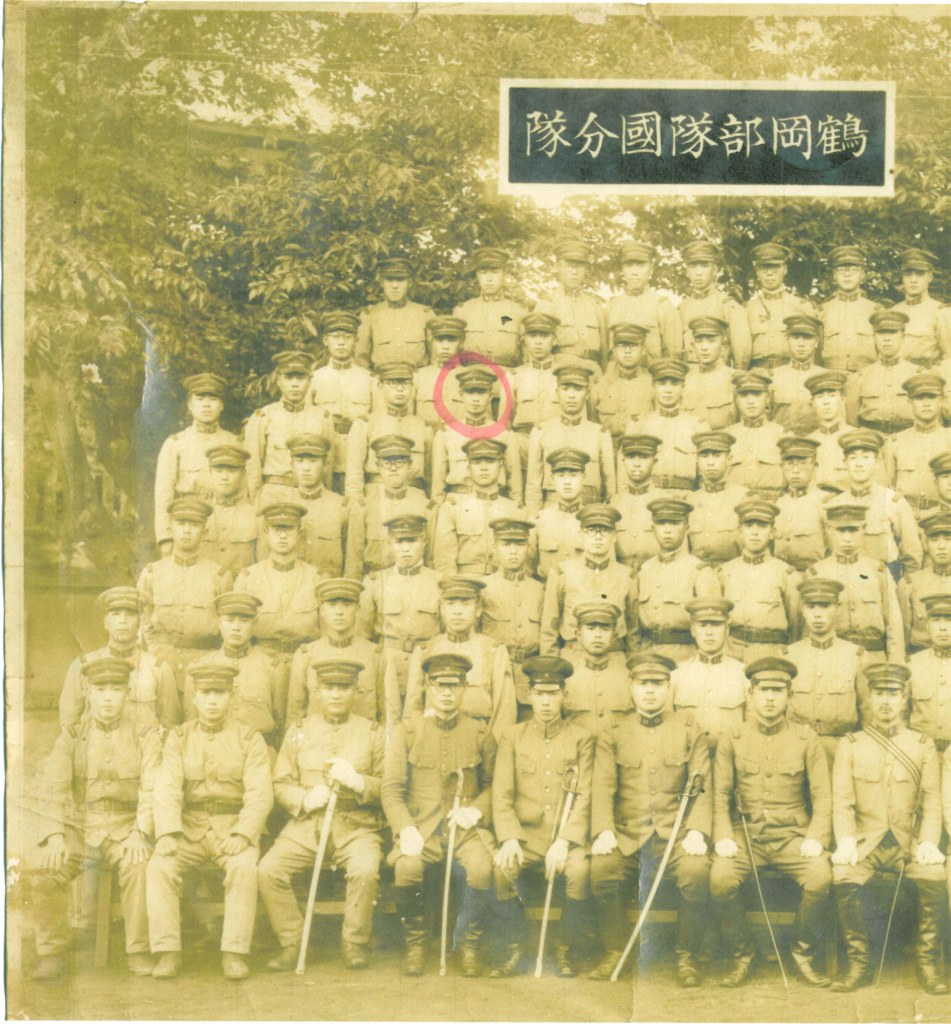
K: Oh, yes, I noticed that there were dates and names on the back of the photos you gave to me.
T: Indeed, he recorded dates and names on photos. He even organized the photos in albums in chronological order. Seriously, I was amazed.
K: What was my grandfather’s life like before the war?
T: He was a very ambitious man. He said he really disliked the countryside, because there were no opportunities. “I want to go to the city and get a good job! Not live peacefully as a farmer and waste my life!” He was like that. That’s why he moved to Tōkyō alone when he was 14. That may seem like a very young age to move out for you, but at that time it was quite ordinary. He said he worked in a department store while studying to become a government employee. But unfortunately that dream collapsed because of the war. That’s why I wanted your mother and you to study hard. Your grandfather could not fulfill his dream but you have the chance. Your grandfather would be very jealous of you if he were alive. You’re young, so just do what you want to do. Everything gets limited when you get older like me.
K: Do you know what my grandfather was doing during the war?
T: He was sent to Manchuria, but he hardly ever went to the battlefields. He didn’t have a high rank. He was a normal soldier, I guess it was just simply pure luck. He was in the last group waiting in line to go to battle. So most of the time he was waiting in the headquarters. When he did go to battle occasionally, he said that he hardly ever fought. He wanted to live. I guess he just simply could not throw away his ambition.
K: I heard that my grandfather went to Siberia after the war, but could you explain in more detail what happened?
T: After serving in Manchuria, your grandfather was sent to the Northern Islands in Hokkaidō to prepare for war with the Soviet Union. He managed to survive there until the war ended. But then the Japanese soldiers were captured by the Soviet Red Army as prisoners. Your grandfather was one of them. These soldiers were sent to Russia and were forced to work as prisoners. Many of them died. Your grandfather was a very clever person. He understood very well what situation he was in, and he knew that his body would definitely not last outside. So he learned Russian. He said that he listened to the guards speaking. That is quite a hard thing to do, but I guess he was just one of those people who could pull off those things. He became friendly with the guards. It’s a bit hard to explain, but he became the favored one. So the guards gave him a job to burn the fire for the Russians. He said it was hard work, but it kept him warm, and it was definitely better than staying outside.
K: So how long was he imprisoned?
T: It took seven years after the war until they released him
K: Wasn’t that about ten years away from Japan? Did he manage to make his dream come true?
T: No, unfortunately, he had to support his family so he had to go back to Shirakawa [in Fukushima prefecture, where my grandmother lives now]. He worked in a small local city.That is where he met me. But he never complained about the war and his dream. He just simply accepted it as fate. Before he died he said he was happy, with your mother as his daughter and you as his grandson. People nowadays don’t really think about the war as much as before.
K: I think it’s important to pass the story on.
T: Yes, me too. I think it’s the mission for our older generation, to tell these stories to the younger generation. That’s why your grandfather told us his story.
Comments: I believe this interview was very meaningful. It allowed me to get a deeper understanding of my grandfather, because now I understand his personality. Some traits of my grandfather are exactly like my mother. My mother also thought “I want to go to the city and get a good job! Not live peacefully as a farmer and waste my life!” and she did go to Tōkyō, just like my grandfather. The interview also gave me an opportunity to look through past photos of my grandfather during the war. I could see with my own eyes what the war zone was like in the photos.