J08, Sayaka Satō ‘01, Sachio Fukui, Neighbor, 1925, Shizuoka, Tōkyō, Tochigi
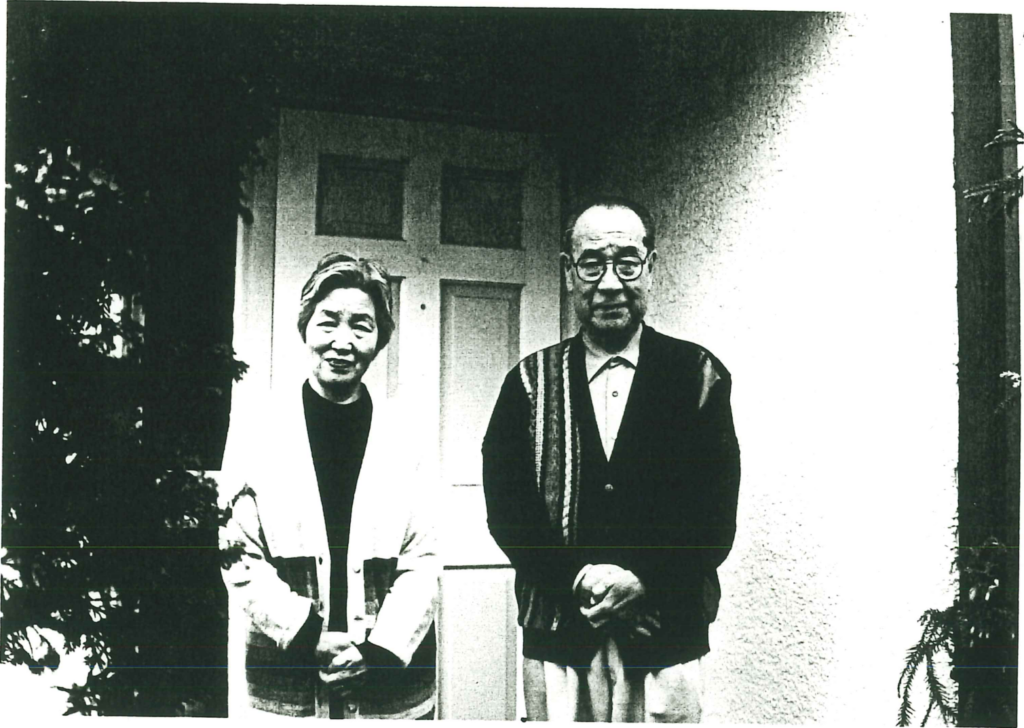
I was able to interview Mr Sachio Fukui, who is 74 years old. Mr Fukui is a neighbor who lives across the street from my house. Mr Fukui experienced the Second World War, and he shared the experiences and feelings he had during those harsh times.
Q: How did you feel when you found out that Japan had joined the war?
A: I think it was on the 8th of December, 1941, that Japan went to war against the United States. I was only in Grade 9 (the third year of middle school) then, and I believed that Japan would win, or at least come close to a tie. I thought that Japan was equal to the United States, and I was pretty sure that Japan would not lose. Anyway, all I could say about my first reaction was that I was surprised.
Q: What were the difficulties during the war?
A: The biggest problem was food. Where I lived, the conditions were not as harsh as in the big cities. I lived in a mountainous environment within Shizuoka prefecture. But the amount of food was very limited. We had salt and miso but could not get sugar, milk or oil. My father went to the city to trade shiitake (mushrooms), firewood, and charcoal in order to get rice and fertilizer for the family.
In 1939, the government took control of the necessary items and food. It was not possible for my father to go and trade. My father lost his job, and to keep our family going, my mother traded her kimono for food. We were basically eating based on how much my mother made. We ate okayu (gruel) and imo (potatoes) almost everyday.
Q: What was it like to be in the bōkūgō (air raid shelter)?
A: Because I lived in rural Shizuoka, bombs were not dropped in those areas, but when airplanes passed overhead, we had to cover our lamps and lights with black cloth, so that no light could be seen from outside. My wife lived in Tōkyō during the war, and she went into the bōkūgō very often. Many bombs were dropped in the main big cities like Tōkyō.
Q: What happened to your brothers and sisters during the war?
A: My oldest brother was the principal of a local school. My second oldest brother was sent to Manchuria. Unfortunately, he died there, not by fighting but by disease. My third oldest brother was a photographer for the newspaper, and my younger brother was in school. My older sister was already married and was living in Izu on a farm.
Q: What happened to you after the war started?
A: I was not able to finish middle school, because I was sent to the Naval Academy in Hiroshima to become a naval officer. There, I spent my time with the rest of my friends learning how to become a great naval officer But I never went to war. Before I could graduate, the war ended.
Q: Was there any discrimination against Koreans?
A: Because I lived in Shizuoka, I was not aware of it, but there was still some discrimination. This was mainly among the adults, but many Japanese children and Korean children played with each other; they were not aware of the difference, I guess. The Koreans’ homes were dirty and small. But I guess this is something you can’t avoid, especially if you’re coming to another country for a better life. The Japanese could not live in clean, big houses when they left for Brazil, you know.
Q: What changed after the American soldiers came after the war, and what were your reactions?
A: To be honest, I was surprised. We were all so scared and nervous when they came into the country, but they were mostly nice. Of course, there were very mean people as well, but mostly they were willing to reach out to us. Maybe this was because of their Christian background. I think they had to be nice. Japan at that time was so weak and so pulled apart that they just couldn’t be indifferent.
I think that, for the most part, people’s sense of values changed. Mine surely did. Many adults had lost confidence, because everything that they had believed in was destroyed. Though the adults could not fully open up to the Americans, many young people were influenced by the American culture. It must have been tough from the adults’ point of view.
Q: What was Japan like after the war?
A: It was tough in the first few years. We used to make salt by evaporating sea water. Then we brought the salt to the farmers and traded it for rice; money was useless. People rode on the roofs of trains to get from one place to another, because they were so crowded.
It was amazing. Japan reconstructed itself very fast. The zaibatsu (financial-industrial combines) disappeared and were divided into many small companies. But so much was under government control. After the war ended, I joined Mitsui and Company. I was sent to the United States soon after. It was really something. They were brilliant people, obviously a lot wealthier than the Japanese. The greatest contribution was they helped me very much. They accepted us Japanese, and I am very thankful for that. But these days the Americans are just out of control.
Q: I know that looking at the war brings you bad memories, but do you have any good memories?
A: To be honest, no. Maybe if Japan had won the war, maybe there would be some good memories. But so many people sacrificed their lives for nothing, it seems. If I look back on it now, the fact that I was able to make the closest friends at the Naval Academy was great. I still meet them now, you know. We used to do everything together: eat, sleep, bathing, and harvesting a little rice in the back garden—everything. There’s a bond between us which can never break.
I was able to get a few replies from his wife, Mrs. Fukui, who lived in Tōkyō during the war.
Q: What do you remember about the bombing?
A: It was awful. I remember going into the bōkūgō (air raid shelter) so many times during the night that my mother had told me to sleep in my clothes and not in my pajamas, so that we could get out of the house as soon as we heard the siren. The most disastrous kūshū (air raid) was on the night of March 9-10. I cannot forget this night. You could see the airplanes actually dropping these explosive bombs. The sky was all red. The bombing was like a game to the U.S. pilots.
One day, when there was a kūshū, my house almost caught fire. The planes were dropping shōidan (incendiary bombs). When these shōidan exploded, oil splattered all over the roof to cause a fire. The Japanese houses were all made of wood, so if one house caught fire, it would easily spread to the others which would catch fire too. All my neighbors helped to get it out.
Q: What did you do during the war?
A: I was sent to a factory where they made parts for airplanes. Later, after I went to Tochigi for sokai (evacuation), I worked at a factory there, too. Those days were tough, but I was able to experience so many things.
Q: I would like to ask this of both of you. What do you think about war?
A: One cannot understand the hardships of war if they don’t experience it. The Americans will never understand the miseries and hardships that we had to face. War is something that is unnecessary in this world. A war like World War II should not have to occur ever again in the future.
By interviewing the Fukuis, I was able to get a closer look on the harsh realities of the Second World War. It also reminded me that war should never be allowed, whatever the reason.