H04U, Tomoe Endō ‘00, Shizue Osias, Grandmother, 1928, Toshiko Endō, Grandmother, 1920, Yokohama: Minami-ku, Shizuoka, Tōkyō, Nagano
I interviewed both of my grandmothers about their experiences during World War II. Shizue Sugitō Osias is now 70 years old. She was 17 years old when she heard the air raid alarms in Yokohama and she was forced to evacuate with her father. Toshiko Yanagihara Endō is now 78 years old. She was 25 when she saw Fukugawa, an area of Tōkyō, go up in flames and she was forced to evacuate as well.
When Shizue heard the air raid alarm, she ran out of her house holding on to the backpack that she had gotten ready for an emergency. In the backpack, she had some food and some clothes. When she left the house, she saw American B-29 bombers aiming in their direction. The planes were dropping bombs that split in the air and threw down incendiary flares, like machine guns shooting down at the ground. She said that these incendiary bombs looked like firecrackers banging on the concrete. She clearly remembered the situation she was in. She said that there was a woman who had a red futon mattress to cover her head and protect herself. But because that futon made it easier for the Americans to aim at her, the other people who were running away with her took the futon away from her. The woman was screaming her head off to get the futon back, but the other people dragged her away to save her life. Shizue also remembered she had to step over the dead bodies of people who had been killed just in front of her, but she was not afraid, because at that time she was too busy trying to save her own life.
After the air raid, her father had lost everything, so she and her father evacuated to Numazu in Shizuoka prefecture, where her father’s younger brother lived with his family. They did not have enough food, and because Shizue was only 19 years old, she couldn’t get a full-time job so she helped on her uncle’s mikan (tangerine) farm. She remembered eating “fake” curry rice which used pumpkin and spices. The pumpkin was used to make the “fake” curry have a color like real “curry.” She said that she would never be able to forget about the war.
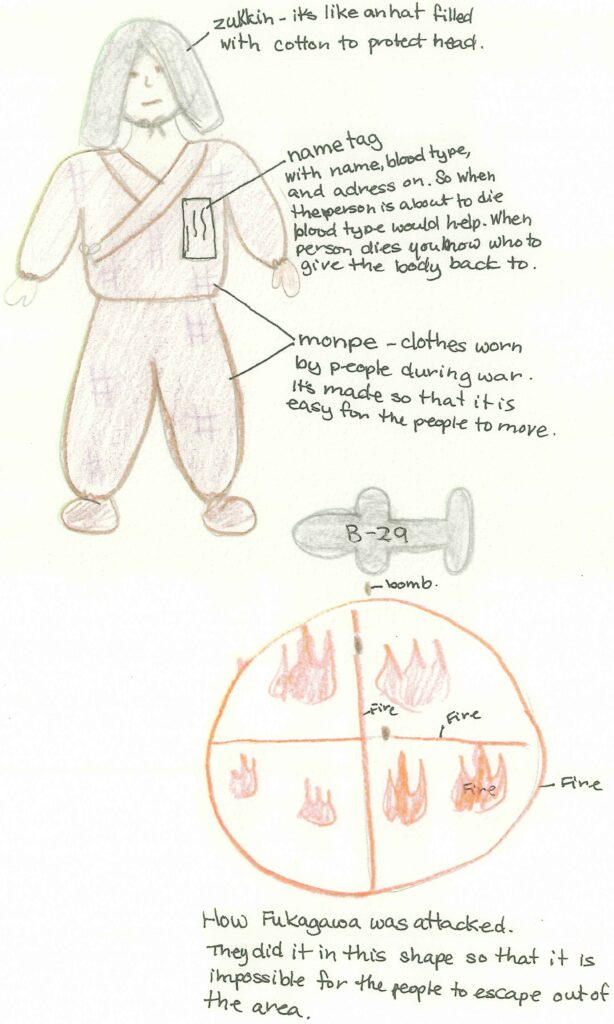
Toshiko was 25 years old when she saw the American B-29 bombers cross Fukugawa in Tōkyō, both from north to south and from east to west. She saw the flames rise, and she said that the rivers in that area turned into boiling water from the bombing, but people jumped into the river to escape the heat from the fire and then they died. That’s all she remembers about the bombing of Tōkyō.
The bombing forced her family to evacuate to Nagano prefecture. She was 25 years old and taking care of the children who evacuated with her. She said that there was not enough food, especially rice, so they mixed sweet potatoes and rice to increase the amount of food they were eating. She said that the children got lice and lice eggs in their head easily, so one of her jobs was to pick out the lice and pop the eggs with her fingers. Also they boiled the children’s clothes to kill the lice. At night she had to cover all the light bulbs with black cloth, so that light didn’t leak out of the house. They did this to camouflage their houses to avoid the night attacks of the American bombers. Toshiko says that she can clearly remember the fear she felt when the air raid alarm went off. She always tells me how lucky I am that I don’t have to go through all that misery and suffering during and after the war.
Listening to their experiences during the war made me think more about war and peace. Also it made me feel scared about what people are capable of doing to each other and how one bomb can kill so many people. I felt that war should never happen again and that these stories from my grandmother’s should be passed down to many generations. so that people won’t start a war again and suffer.